

AIDA
AIDA
Stadttheater Klagenfurt
Giuseppe Verdi’s Aida is a grand opera set in ancient Egypt, telling a powerful story of love, loyalty, and sacrifice.
Aida, an Ethiopian princess held captive in Egypt, is secretly in love with the Egyptian warrior Radamès.
Their love is threatened by war, political duty, and the jealousy of Amneris, the Pharaoh’s daughter.
Torn between love for each other and loyalty to their homelands, Aida and Radamès face an impossible choice that leads to one of opera’s most moving and tragic endings.

AIDA
Giuseppe Verdi’s Aida is a grand opera set in ancient Egypt, telling a powerful story of love, loyalty, and sacrifice. Aida, an Ethiopian princess held captive in Egypt, is secretly in love with the Egyptian warrior Radamès. Their love is threatened by war, political duty, and the jealousy of Amneris, the Pharaoh’s daughter. Torn between love for each other and loyalty to their homelands, Aida and Radamès face an impossible choice that leads to one of opera’s most moving and tragic endings.
AIDA
Giuseppe Verdi’s Aida is a grand opera set in ancient Egypt, telling a powerful story of love, loyalty, and sacrifice. Aida, an Ethiopian princess held captive in Egypt, is secretly in love with the Egyptian warrior Radamès. Their love is threatened by war, political duty, and the jealousy of Amneris, the Pharaoh’s daughter. Torn between love for each other and loyalty to their homelands, Aida and Radamès face an impossible choice that leads to one of opera’s most moving and tragic endings.
AIDA
Giuseppe Verdi’s Aida is a grand opera set in ancient Egypt, telling a powerful story of love, loyalty, and sacrifice. Aida, an Ethiopian princess held captive in Egypt, is secretly in love with the Egyptian warrior Radamès. Their love is threatened by war, political duty, and the jealousy of Amneris, the Pharaoh’s daughter. Torn between love for each other and loyalty to their homelands, Aida and Radamès face an impossible choice that leads to one of opera’s most moving and tragic endings.
AIDA
Giuseppe Verdi’s Aida is a grand opera set in ancient Egypt, telling a powerful story of love, loyalty, and sacrifice. Aida, an Ethiopian princess held captive in Egypt, is secretly in love with the Egyptian warrior Radamès. Their love is threatened by war, political duty, and the jealousy of Amneris, the Pharaoh’s daughter. Torn between love for each other and loyalty to their homelands, Aida and Radamès face an impossible choice that leads to one of opera’s most moving and tragic endings.
AIDA
Giuseppe Verdi’s Aida is a grand opera set in ancient Egypt, telling a powerful story of love, loyalty, and sacrifice. Aida, an Ethiopian princess held captive in Egypt, is secretly in love with the Egyptian warrior Radamès. Their love is threatened by war, political duty, and the jealousy of Amneris, the Pharaoh’s daughter. Torn between love for each other and loyalty to their homelands, Aida and Radamès face an impossible choice that leads to one of opera’s most moving and tragic endings.
AIDA
Giuseppe Verdi’s Aida is a grand opera set in ancient Egypt, telling a powerful story of love, loyalty, and sacrifice. Aida, an Ethiopian princess held captive in Egypt, is secretly in love with the Egyptian warrior Radamès. Their love is threatened by war, political duty, and the jealousy of Amneris, the Pharaoh’s daughter. Torn between love for each other and loyalty to their homelands, Aida and Radamès face an impossible choice that leads to one of opera’s most moving and tragic endings.
MADAMA BUTTERFLY
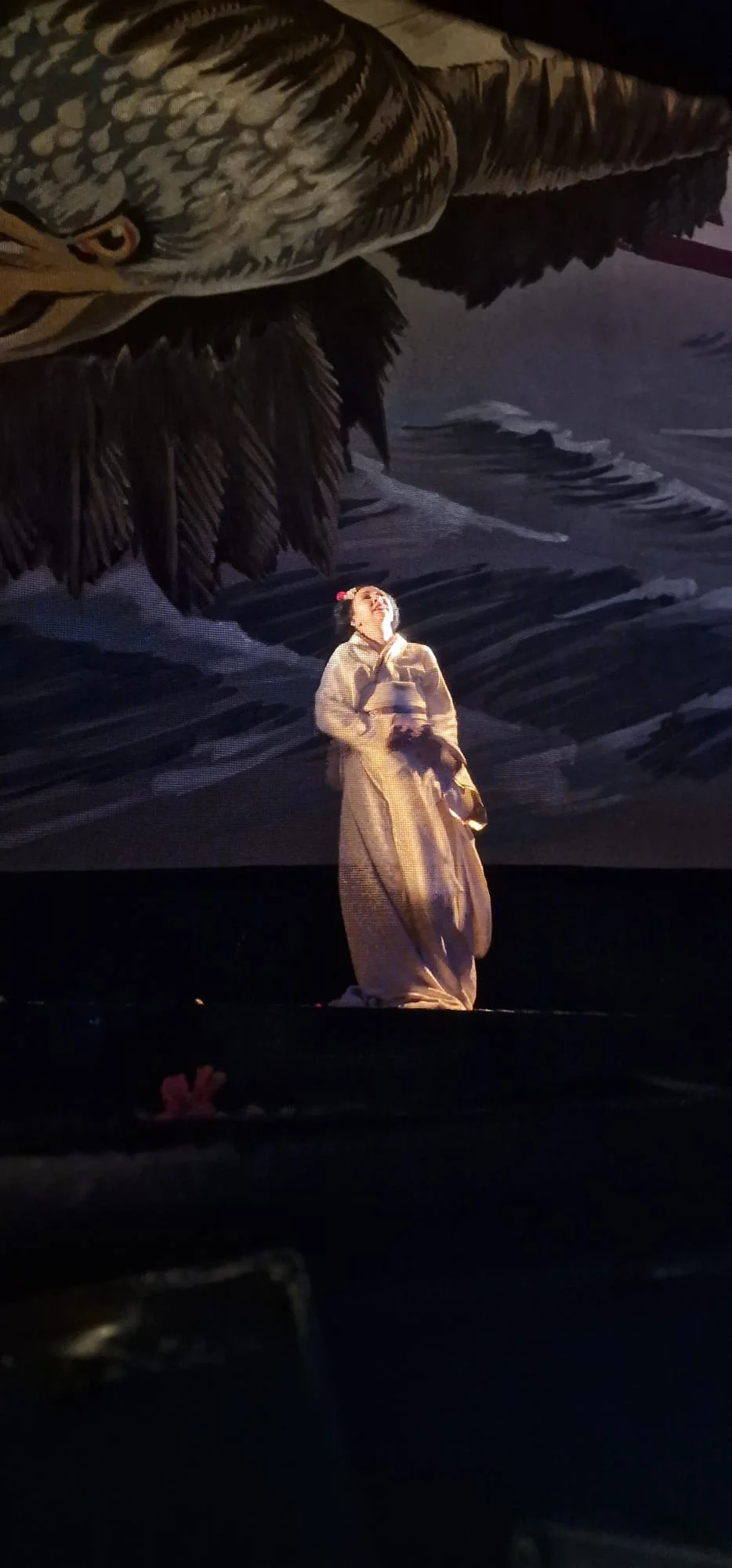
The relationship between Cio-Cio-San, called »Butterfly«, and US American marine officer Benjamin F. Pinkerton begins as a proforma wedding – with unexpected consequences:
The young Japanese woman cuts herself off from her family, hoping to leave her impoverished origins behind; Pinkerton, on the other hand, despite his overwhelming desires, doesn’t feel committed to this »provisional marriage«.
When he’s ordered home Cio-Cio-San’s left behind, expecting his baby. She waits unwaveringly for his return; her only rock is her faithful servant Suzuki. But when Pinkerton’s ship re-docks in Nagasaki, the illusion shatters: he married another woman in America.
When Butterfly realises they intend to take her child as well, she sees no other way out; she commits ritual suicide, as her father before her.
MADAMA BUTTERFLY
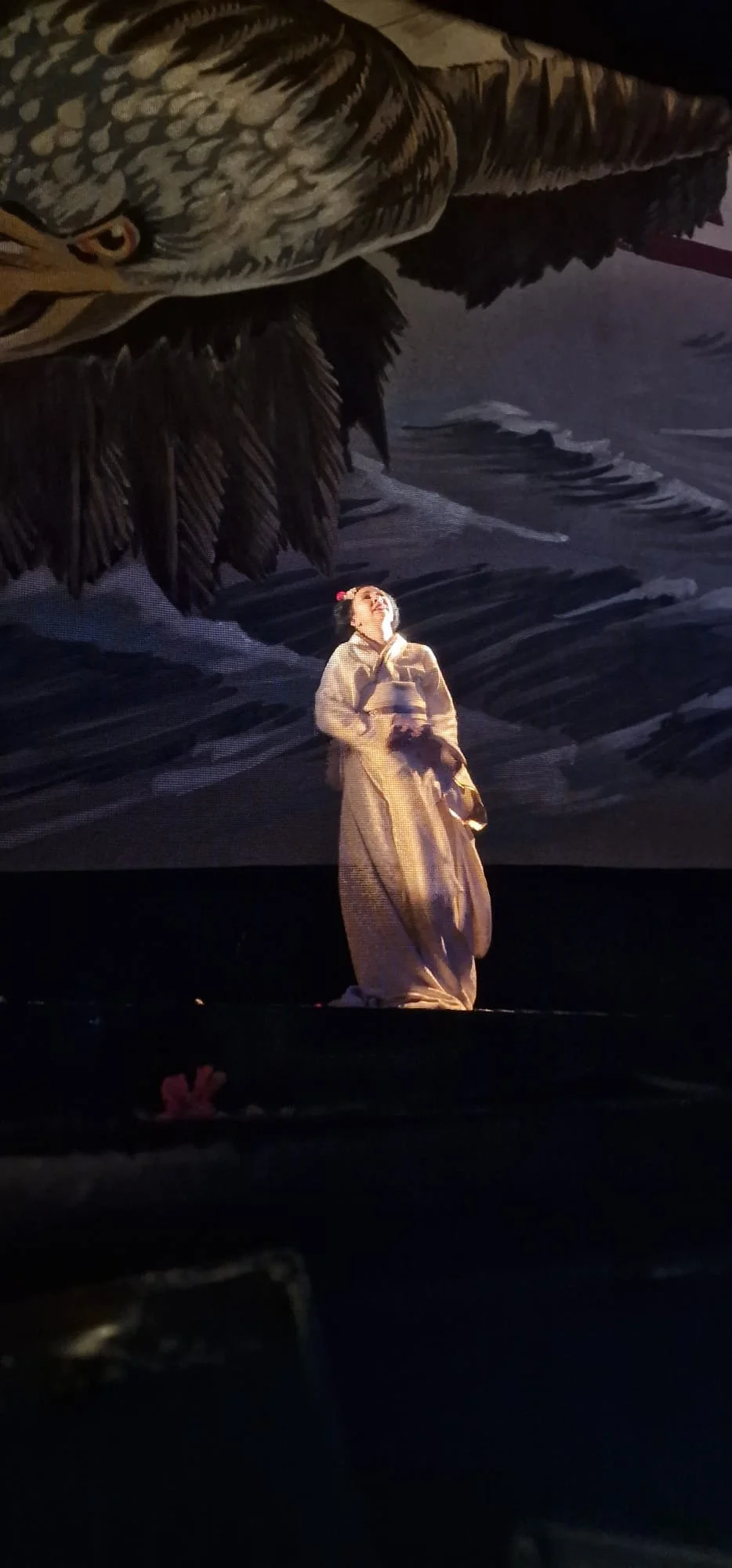
The relationship between Cio-Cio-San, called »Butterfly«, and US American marine officer Benjamin F. Pinkerton begins as a proforma wedding – with unexpected consequences:
The young Japanese woman cuts herself off from her family, hoping to leave her impoverished origins behind; Pinkerton, on the other hand, despite his overwhelming desires, doesn’t feel committed to this »provisional marriage«.
When he’s ordered home Cio-Cio-San’s left behind, expecting his baby. She waits unwaveringly for his return; her only rock is her faithful servant Suzuki. But when Pinkerton’s ship re-docks in Nagasaki, the illusion shatters: he married another woman in America.
When Butterfly realises they intend to take her child as well, she sees no other way out; she commits ritual suicide, as her father before her.
AIDA
Giuseppe Verdi’s Aida is a grand opera set in ancient Egypt, telling a powerful story of love, loyalty, and sacrifice. Aida, an Ethiopian princess held captive in Egypt, is secretly in love with the Egyptian warrior Radamès. Their love is threatened by war, political duty, and the jealousy of Amneris, the Pharaoh’s daughter. Torn between love for each other and loyalty to their homelands, Aida and Radamès face an impossible choice that leads to one of opera’s most moving and tragic endings.
AIDA
Giuseppe Verdi’s Aida is a grand opera set in ancient Egypt, telling a powerful story of love, loyalty, and sacrifice. Aida, an Ethiopian princess held captive in Egypt, is secretly in love with the Egyptian warrior Radamès. Their love is threatened by war, political duty, and the jealousy of Amneris, the Pharaoh’s daughter. Torn between love for each other and loyalty to their homelands, Aida and Radamès face an impossible choice that leads to one of opera’s most moving and tragic endings.
AIDA
Giuseppe Verdi’s Aida is a grand opera set in ancient Egypt, telling a powerful story of love, loyalty, and sacrifice. Aida, an Ethiopian princess held captive in Egypt, is secretly in love with the Egyptian warrior Radamès. Their love is threatened by war, political duty, and the jealousy of Amneris, the Pharaoh’s daughter. Torn between love for each other and loyalty to their homelands, Aida and Radamès face an impossible choice that leads to one of opera’s most moving and tragic endings.

Falstaff
Verdi’s final work is commonly perceived as a joyful comedy about a fat boozer who cynically seduces two women and gets severely punished for it. Only once you read into the Shakespearian original and carefully analyse the extraordinary richness of the opera’s musical motifs, you get to the bottom of the mysterious work, consciously written by the aged composer as a farewell to his momentous oeuvre, impressive life, and the mortal world, which he ironically summed up as the Creator’s painful joke played on humans and their endeavours.
To get to the deeper layer of the opera and discover its supreme artistic beauty one must leave aside the stereotypical perception of the protagonist, commonly seen as a man solely interested in vulgar jests and the scraps of earthy pleasures still available to him. It is worthwhile to reject the cliches and look into the reasons why Falstaff become the man whose shenanigans we see onstage. This production opens with a prologue set to the overture to one of Verdi’s earliest operas, which tells the sad story of Falstaff’s happy friendship with ‘Prince Harry’ which ends abruptly (and tragically for Falstaff) after the latter becomes Henry IV of France and erases his former guardian and mentor from his royal life. An unexpected rejection leading to loneliness, misery, and lack of perspectives is an experience we can all sympathise with. The production zooms in on the exact moment when Falstaff is driven to the brink of despair. Pushed away by a man he loved, Falstaff decides to drink his life away. As part of this banal plan, he moves into a brothel inhabited by fallen people like himself. He is angry and bitter. His humour is caustic and confrontational. The production does not portray him as a good-natured raconteur because of the extraordinary motifs recurring in the orchestral part. Falstaff’s plan falters when he witnesses genuine love budding between two young people. He suddenly realises that it is impossible to find solace in the arms of a prostitute at the hour of death – only a loving, faithful woman can be the source of comfort to a dying man. The idea to seduce a woman he pines for tragically backfires not merely because she is married but because of Falstaff’s cunning decision to have a backup candidate. When the two women compare notes, the crafty heartbreaker is headed for a disaster and ultimate death at the brink of drunken delirium. In his final moments, he concludes that human life is a sad joke on all of us.
Falstaff
Verdi’s final work is commonly perceived as a joyful comedy about a fat boozer who cynically seduces two women and gets severely punished for it. Only once you read into the Shakespearian original and carefully analyse the extraordinary richness of the opera’s musical motifs, you get to the bottom of the mysterious work, consciously written by the aged composer as a farewell to his momentous oeuvre, impressive life, and the mortal world, which he ironically summed up as the Creator’s painful joke played on humans and their endeavours.
To get to the deeper layer of the opera and discover its supreme artistic beauty one must leave aside the stereotypical perception of the protagonist, commonly seen as a man solely interested in vulgar jests and the scraps of earthy pleasures still available to him. It is worthwhile to reject the cliches and look into the reasons why Falstaff become the man whose shenanigans we see onstage. This production opens with a prologue set to the overture to one of Verdi’s earliest operas, which tells the sad story of Falstaff’s happy friendship with ‘Prince Harry’ which ends abruptly (and tragically for Falstaff) after the latter becomes Henry IV of France and erases his former guardian and mentor from his royal life. An unexpected rejection leading to loneliness, misery, and lack of perspectives is an experience we can all sympathise with. The production zooms in on the exact moment when Falstaff is driven to the brink of despair. Pushed away by a man he loved, Falstaff decides to drink his life away. As part of this banal plan, he moves into a brothel inhabited by fallen people like himself. He is angry and bitter. His humour is caustic and confrontational. The production does not portray him as a good-natured raconteur because of the extraordinary motifs recurring in the orchestral part. Falstaff’s plan falters when he witnesses genuine love budding between two young people. He suddenly realises that it is impossible to find solace in the arms of a prostitute at the hour of death – only a loving, faithful woman can be the source of comfort to a dying man. The idea to seduce a woman he pines for tragically backfires not merely because she is married but because of Falstaff’s cunning decision to have a backup candidate. When the two women compare notes, the crafty heartbreaker is headed for a disaster and ultimate death at the brink of drunken delirium. In his final moments, he concludes that human life is a sad joke on all of us.
Falstaff
Verdi’s final work is commonly perceived as a joyful comedy about a fat boozer who cynically seduces two women and gets severely punished for it. Only once you read into the Shakespearian original and carefully analyse the extraordinary richness of the opera’s musical motifs, you get to the bottom of the mysterious work, consciously written by the aged composer as a farewell to his momentous oeuvre, impressive life, and the mortal world, which he ironically summed up as the Creator’s painful joke played on humans and their endeavours.
To get to the deeper layer of the opera and discover its supreme artistic beauty one must leave aside the stereotypical perception of the protagonist, commonly seen as a man solely interested in vulgar jests and the scraps of earthy pleasures still available to him. It is worthwhile to reject the cliches and look into the reasons why Falstaff become the man whose shenanigans we see onstage. This production opens with a prologue set to the overture to one of Verdi’s earliest operas, which tells the sad story of Falstaff’s happy friendship with ‘Prince Harry’ which ends abruptly (and tragically for Falstaff) after the latter becomes Henry IV of France and erases his former guardian and mentor from his royal life. An unexpected rejection leading to loneliness, misery, and lack of perspectives is an experience we can all sympathise with. The production zooms in on the exact moment when Falstaff is driven to the brink of despair. Pushed away by a man he loved, Falstaff decides to drink his life away. As part of this banal plan, he moves into a brothel inhabited by fallen people like himself. He is angry and bitter. His humour is caustic and confrontational. The production does not portray him as a good-natured raconteur because of the extraordinary motifs recurring in the orchestral part. Falstaff’s plan falters when he witnesses genuine love budding between two young people. He suddenly realises that it is impossible to find solace in the arms of a prostitute at the hour of death – only a loving, faithful woman can be the source of comfort to a dying man. The idea to seduce a woman he pines for tragically backfires not merely because she is married but because of Falstaff’s cunning decision to have a backup candidate. When the two women compare notes, the crafty heartbreaker is headed for a disaster and ultimate death at the brink of drunken delirium. In his final moments, he concludes that human life is a sad joke on all of us.
Falstaff
Verdi’s final work is commonly perceived as a joyful comedy about a fat boozer who cynically seduces two women and gets severely punished for it. Only once you read into the Shakespearian original and carefully analyse the extraordinary richness of the opera’s musical motifs, you get to the bottom of the mysterious work, consciously written by the aged composer as a farewell to his momentous oeuvre, impressive life, and the mortal world, which he ironically summed up as the Creator’s painful joke played on humans and their endeavours.
To get to the deeper layer of the opera and discover its supreme artistic beauty one must leave aside the stereotypical perception of the protagonist, commonly seen as a man solely interested in vulgar jests and the scraps of earthy pleasures still available to him. It is worthwhile to reject the cliches and look into the reasons why Falstaff become the man whose shenanigans we see onstage. This production opens with a prologue set to the overture to one of Verdi’s earliest operas, which tells the sad story of Falstaff’s happy friendship with ‘Prince Harry’ which ends abruptly (and tragically for Falstaff) after the latter becomes Henry IV of France and erases his former guardian and mentor from his royal life. An unexpected rejection leading to loneliness, misery, and lack of perspectives is an experience we can all sympathise with. The production zooms in on the exact moment when Falstaff is driven to the brink of despair. Pushed away by a man he loved, Falstaff decides to drink his life away. As part of this banal plan, he moves into a brothel inhabited by fallen people like himself. He is angry and bitter. His humour is caustic and confrontational. The production does not portray him as a good-natured raconteur because of the extraordinary motifs recurring in the orchestral part. Falstaff’s plan falters when he witnesses genuine love budding between two young people. He suddenly realises that it is impossible to find solace in the arms of a prostitute at the hour of death – only a loving, faithful woman can be the source of comfort to a dying man. The idea to seduce a woman he pines for tragically backfires not merely because she is married but because of Falstaff’s cunning decision to have a backup candidate. When the two women compare notes, the crafty heartbreaker is headed for a disaster and ultimate death at the brink of drunken delirium. In his final moments, he concludes that human life is a sad joke on all of us.
Falstaff
Verdi’s final work is commonly perceived as a joyful comedy about a fat boozer who cynically seduces two women and gets severely punished for it. Only once you read into the Shakespearian original and carefully analyse the extraordinary richness of the opera’s musical motifs, you get to the bottom of the mysterious work, consciously written by the aged composer as a farewell to his momentous oeuvre, impressive life, and the mortal world, which he ironically summed up as the Creator’s painful joke played on humans and their endeavours.
To get to the deeper layer of the opera and discover its supreme artistic beauty one must leave aside the stereotypical perception of the protagonist, commonly seen as a man solely interested in vulgar jests and the scraps of earthy pleasures still available to him. It is worthwhile to reject the cliches and look into the reasons why Falstaff become the man whose shenanigans we see onstage. This production opens with a prologue set to the overture to one of Verdi’s earliest operas, which tells the sad story of Falstaff’s happy friendship with ‘Prince Harry’ which ends abruptly (and tragically for Falstaff) after the latter becomes Henry IV of France and erases his former guardian and mentor from his royal life. An unexpected rejection leading to loneliness, misery, and lack of perspectives is an experience we can all sympathise with. The production zooms in on the exact moment when Falstaff is driven to the brink of despair. Pushed away by a man he loved, Falstaff decides to drink his life away. As part of this banal plan, he moves into a brothel inhabited by fallen people like himself. He is angry and bitter. His humour is caustic and confrontational. The production does not portray him as a good-natured raconteur because of the extraordinary motifs recurring in the orchestral part. Falstaff’s plan falters when he witnesses genuine love budding between two young people. He suddenly realises that it is impossible to find solace in the arms of a prostitute at the hour of death – only a loving, faithful woman can be the source of comfort to a dying man. The idea to seduce a woman he pines for tragically backfires not merely because she is married but because of Falstaff’s cunning decision to have a backup candidate. When the two women compare notes, the crafty heartbreaker is headed for a disaster and ultimate death at the brink of drunken delirium. In his final moments, he concludes that human life is a sad joke on all of us.
Falstaff
Verdi’s final work is commonly perceived as a joyful comedy about a fat boozer who cynically seduces two women and gets severely punished for it. Only once you read into the Shakespearian original and carefully analyse the extraordinary richness of the opera’s musical motifs, you get to the bottom of the mysterious work, consciously written by the aged composer as a farewell to his momentous oeuvre, impressive life, and the mortal world, which he ironically summed up as the Creator’s painful joke played on humans and their endeavours.
To get to the deeper layer of the opera and discover its supreme artistic beauty one must leave aside the stereotypical perception of the protagonist, commonly seen as a man solely interested in vulgar jests and the scraps of earthy pleasures still available to him. It is worthwhile to reject the cliches and look into the reasons why Falstaff become the man whose shenanigans we see onstage. This production opens with a prologue set to the overture to one of Verdi’s earliest operas, which tells the sad story of Falstaff’s happy friendship with ‘Prince Harry’ which ends abruptly (and tragically for Falstaff) after the latter becomes Henry IV of France and erases his former guardian and mentor from his royal life. An unexpected rejection leading to loneliness, misery, and lack of perspectives is an experience we can all sympathise with. The production zooms in on the exact moment when Falstaff is driven to the brink of despair. Pushed away by a man he loved, Falstaff decides to drink his life away. As part of this banal plan, he moves into a brothel inhabited by fallen people like himself. He is angry and bitter. His humour is caustic and confrontational. The production does not portray him as a good-natured raconteur because of the extraordinary motifs recurring in the orchestral part. Falstaff’s plan falters when he witnesses genuine love budding between two young people. He suddenly realises that it is impossible to find solace in the arms of a prostitute at the hour of death – only a loving, faithful woman can be the source of comfort to a dying man. The idea to seduce a woman he pines for tragically backfires not merely because she is married but because of Falstaff’s cunning decision to have a backup candidate. When the two women compare notes, the crafty heartbreaker is headed for a disaster and ultimate death at the brink of drunken delirium. In his final moments, he concludes that human life is a sad joke on all of us.
AIDA
Giuseppe Verdi’s Aida is a grand opera set in ancient Egypt, telling a powerful story of love, loyalty, and sacrifice. Aida, an Ethiopian princess held captive in Egypt, is secretly in love with the Egyptian warrior Radamès. Their love is threatened by war, political duty, and the jealousy of Amneris, the Pharaoh’s daughter. Torn between love for each other and loyalty to their homelands, Aida and Radamès face an impossible choice that leads to one of opera’s most moving and tragic endings.


